

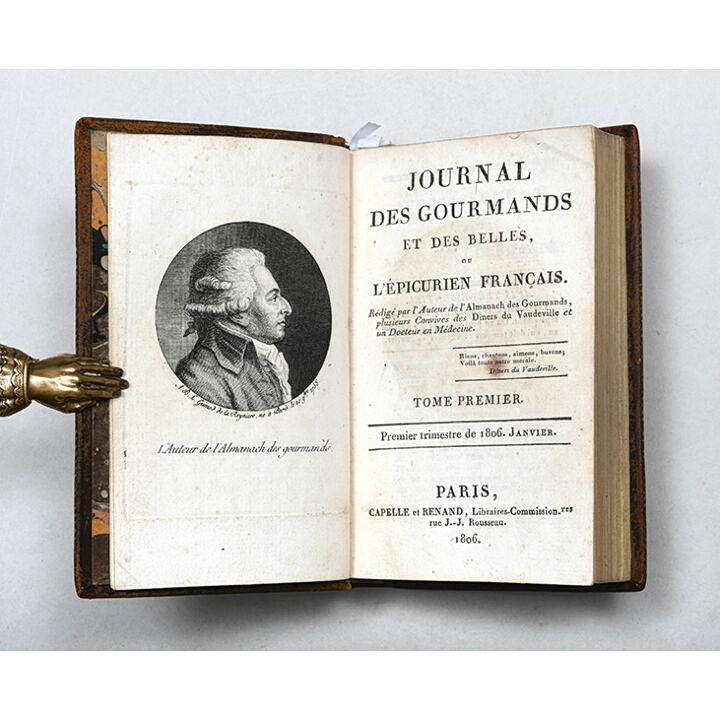
In 1806, Parisian gastronomist Grimaud de la Reyniere launched a new journal, the “Journal des Gourmands et des Belles,” in post-revolutionary France.
From its first issue, the Journal des Gourmands et des Belles of post-revolutionary France aimed to provide readers with advice on food, fashion and theatrical life, all in one publication.
Today almost completely forgotten, the magazine was perhaps the first of its kind in France to gather such a complete range of what we would today call “lifestyle content”.
Early 19th century language aside, it resembles the multi-faceted Instagram accounts of some of today’s influencers. Its author was already famous for the “Almanach des Gourmands” (1803-1812), the seminal text of culinary criticism and the first restaurant guide in history.
The urgent need for advice
Of course, such influences were not unheard of. While manuals of good manners, culinary guides and trade journals defined behavior and etiquette long before the French Revolution of 1789, the real change that came after the French people revolted was not so much the existence of such style guides as the nature, volume and, above all, the urgency of the advice that became widely available.
The new social question
While these works of the Old Regime were aimed at readers who already knew their place in society and had to behave in a certain way in order to secure a certain position on the social scale, the post-revolutionary guides were aimed at readers whose social position was uncertain or newly acquired.
The question people were asking at that time shifted from “how do I behave properly in society?” to “how can I belong to her?”
The Old Regime
The unexpected trajectories of post-revolutionary lifestyle influencers and the content they provided reflect the social, professional and even physical mobility (caused by exile, return or displacement) of the post-Revolutionary era, compared to the rigidity of the Old Regime.
Grimaud de la Reyniere himself had played roles as a lawyer, theater critic and owner of a luxury grocer before reinventing himself as a food writer.
The “school of good manners”
Journalist and publisher Pierre de La Maisongère was a former priest who became editor of the “Journal des Dames et des Modes” from 1797 to 1831, the longest-running fashion magazine of the period.
After the French Revolution, Madame Caban, who had served as Marie Antoinette’s chief courtier, established an elite boarding school or “school of good manners” in the Paris suburbs of Saint-Germain-en-Laye, where the daughters of the new and old elites were educated together in aristocratic etiquette.
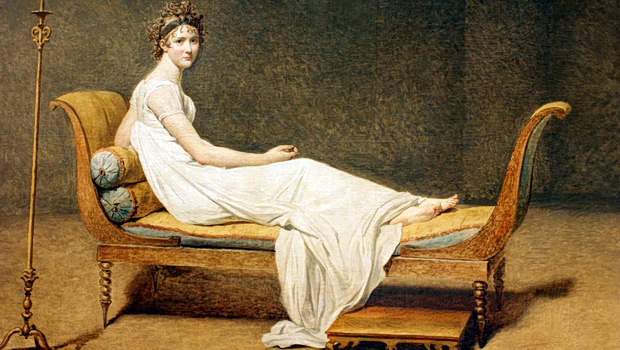
After 1789, influence shifted to the distinguished wives of bankers and financiers, noble or secular figures such as Juliette Recamier, Thérèse Talien, and Fortuna Hamelin, whose interior decoration and dress were observed, imitated, and commented upon by the press.

The formation of good taste, originally a “French affair”
In post-revolutionary France, an eccentric combination of individuals, united by a common ambition: to promote the cultural codes of the Ancien Régime (Old Regime) in a world where the cards had been reshuffled and where taste and material culture (that is, the objects and the system of meanings attached to them, the way they were selected, displayed and interpreted by others) were more than never social determinants.
And the official aesthetic found its representatives: the architects appointed by Napoleon, Charles Percier and Pierre François Léonard Fontaine, whose “Recueil de decoraciones intérieures” codified the style of the Empire for those who had the means to adopt it.
Out the old, in the financiers’ wives
When it came to leadership in women’s fashion, the reins had completely changed hands. Before the Revolution, the French fashion “establishment” consisted of royal wives or mistresses, from Madame de Pompadour to Marie-Antoinette.
After 1789, influence shifted to the distinguished wives of bankers and financiers, noble or worldly, such as Juliette Recamier, Thérèse Talien and Fortuna Hamelin, whose interior decoration and dress were observed, imitated and commented on by the press led by figures such as Pierre de la Messenger.
Social influence was not based on ancestry, but rather on personal charisma and the visual culture of the time
Hôtel de Bourrienne
Madame Ameline, a Creole from the Caribbean island of Saint-Domingue and today the least known of the three, was among the “Merveilleuses,” an influential group of women whose extravagant, neoclassical style of dress characterized the years of the Directory*.
(*The “directorate years” refers to the period of rule of France by the five-member Executive Directorate, which lasted from October 26, 1795 to November 9, 1799. It was the last stage of the French Revolution before Napoleon Bonaparte took power
Améline’s hairstyles and tunics were widely copied, and her salon at the Hôtel de Bourrienne was one of the most brilliant in post-revolutionary Paris.
For these trendsetters, taste was never a matter of individual choices, but an entire way of life, encompassing everything from food to wallpaper to bedding, and their ambition was to shape taste as a whole.
Meanwhile, across the Channel
Of course, such drivers existed elsewhere. In Britain, where the Industrial Revolution had already reshaped society for several decades, corresponding personalities had emerged.
The potter, businessman and abolitionist Josiah Wedgwood secured royal patronage and shaped the neoclassical taste of a rising middle class, turning the industry into a cultural authority.
The English secular Beau Brummell, born neither noble nor rich, made the Prince of Wales bow to his opinion of a lapel line.
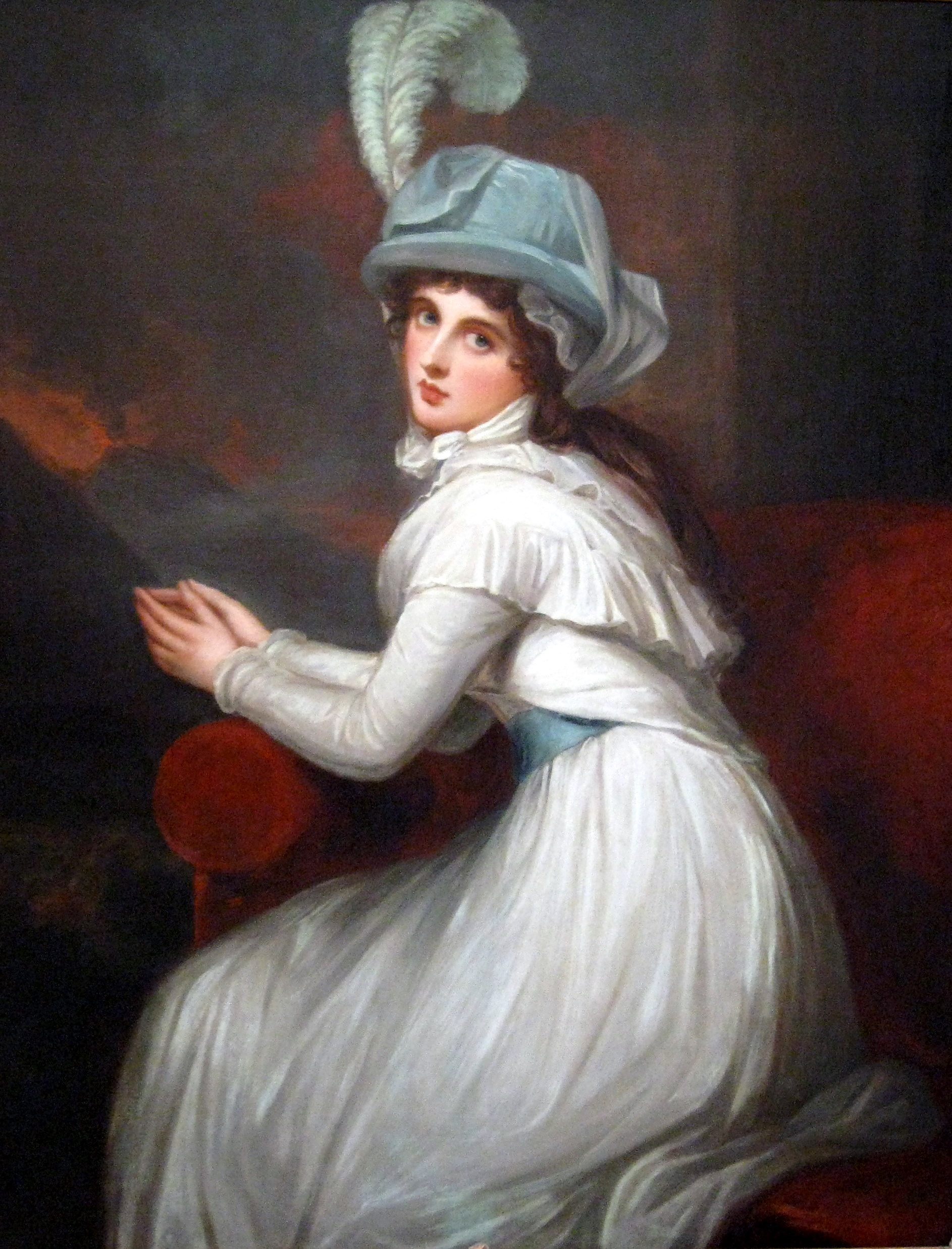
Emma Hamilton, born Amy Lyon in 1765 to a Cheshire blacksmith family, became one of Europe’s most popular women, her image popularized through Romney’s portraits, as was that of Juliet Recamier by the French neoclassical painter Jacques-Louis David.
Social influence was not based on ancestry, but rather on personal charisma and the visual culture of the time.
The restaurant, a Parisian invention of revolutionary times, had meanwhile created an entirely new kind of public space
Revival of luxury industries
What distinguished the case of France was not the existence of these numbers, but the conditions that produced them.
The end of the Reign of Terror had unleashed a long-suppressed thirst for pleasure. Napoleon actively encouraged the revival of the luxury industries – silk, furniture, jewelry, porcelain – both as economic policy and political legitimation.
The upheaval of economic power was itself a product of the revolutionary years: fortunes had been accumulated through the acquisition of biens nationaux (the confiscated estates of the aristocracy and clergy sold off by the state), through agiotage (speculative dealings in currency and public debt that flourished amid the revolutionary chaos), and through contracts to supply the army.
The new elite
From 1808, the creation of an imperial aristocracy institutionalized the rise of a new elite: civil servants and army officers who had risen during the Revolution now held titles without the cultural heritage that traditionally accompanied them.
While a marshal of the Empire might be a duke, he still needed to be shown how to set his table and how to entertain his guests.
The restaurant, a Parisian invention of revolutionary times, had meanwhile created an entirely new kind of public space, in which taste could be displayed, observed, and judged by outsiders—and where a guide like Grimon’s could be presented, not without self-interest, as a necessary necessity.
Post-revolutionary “shaper of fashion”
In Britain, social change was gradual: new industrial estates and a rising military elite had joined the old aristocracy without displacing it.
The existing class absorbed the newcomers. In France, on the other hand, the Revolution had brought about something more disruptive: a far-reaching restructuring of the social world was observed, in which administrators, military, nouveau riche and returning nobility and gentry found themselves moving through the same spaces, salons or dances, for example, without a ‘common map’.
This is what made the post-revolutionary “fashion designer” a quintessentially French invention, not a guide to a society on the move, but a bridge to learning France’s first common cultural language.
Conclusion
“What this shows us is that we often treat the art of lifestyle influence as an exclusively modern phenomenon, but the practice actually began in post-revolutionary Paris, and when we turn to digital content creators to shape our preferences, we are actually continuing a tradition invented by Grimaud de la Reyniere and his illustrious contemporaries,” concludes Emma Schwak in a related article in The Conversion.
Source: In

